Line on Map Found to Add Several Hundred Thousand Dollars to an Otherwise Identical House
The structure is the same, the bricks are the same, and the line is about as wide as a kerb.
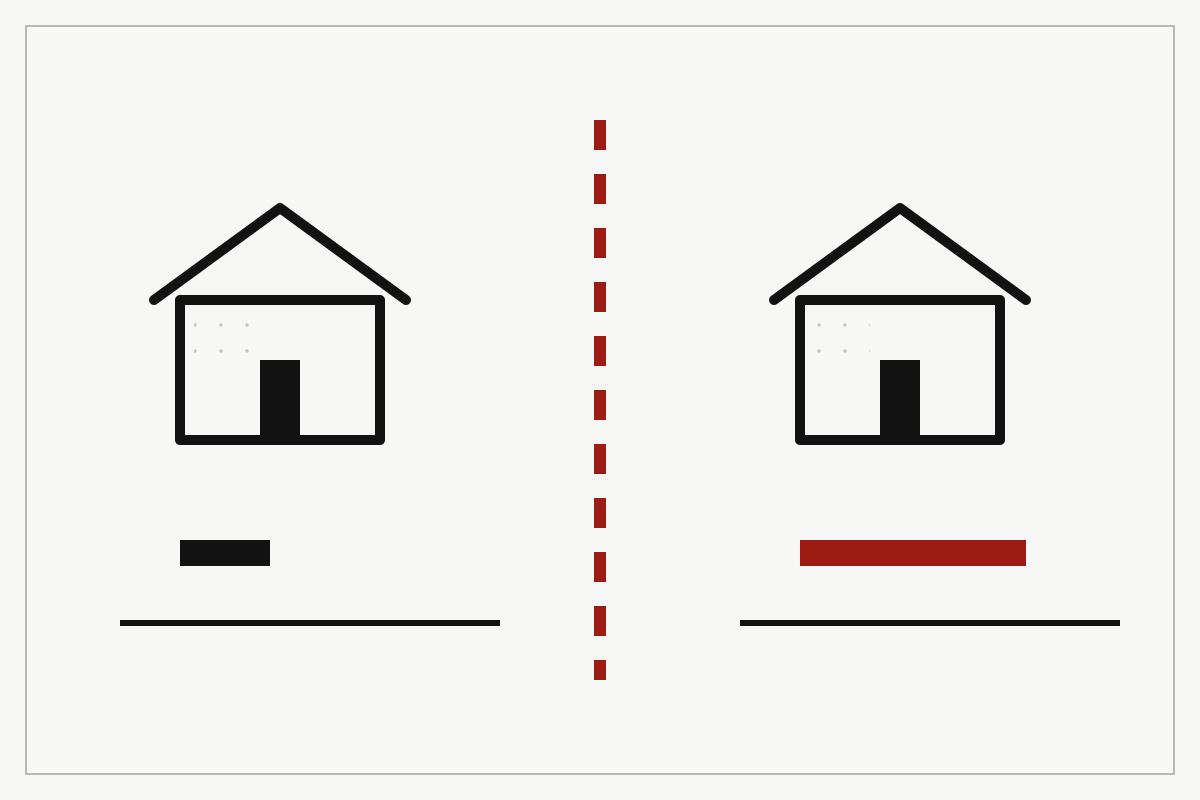
A line drawn on a map in the nineteenth century has been found to add several hundred thousand dollars to the price of a house, depending entirely on which side of it the house is standing.
The Niagara region of Ontario reported a benchmark price of roughly C$570,000 in August. Buffalo, New York — about half an hour away, traffic permitting — reported a median in the region of US$225,000 to $250,000. The houses are, in many cases, the same house.
“We have compared the brick,” said Dr. Solveig Brannigan of the Institute for Comparative Frontage. “It is the same brick. It was probably made by the same people. One pile of it costs twice as much because of a decision taken by men in hats.”
Institute research finds the border to be the most expensive property line in North America, and among the narrowest. At its midpoint on the bridge it is marked by a plaque and, in places, a change in the paving.
“Thirty centimetres,” Brannigan said. “That is the width of the argument.”
The Institute has documented a nightly behaviour it terms cross-border browsing, in which a resident of one country opens property listings in the other at approximately eleven o’clock, not seriously.
“They convert the currency,” Brannigan said. “Then they convert it back, because the first number seemed wrong. Then they look again. The Institute considers this a form of tourism.”
Agents on the American side report a recurring enquiry.
“People want to know whether the price is a typographical error,” said Merrit Vandenbroek of a brokerage the Institute has agreed not to identify. “It is not. I have explained this three hundred times. I have started saying it before they finish asking.”
The comparison collapses, the Institute concedes, at the point where somebody raises employment, healthcare, family, citizenship, or the weather in February.
“That is when you hear it,” Brannigan said. “‘Yes, but.’ Two words. Most expensive sentence in the region.”
The two markets are currently moving in opposite directions, one easing and one climbing, which the Institute calculates will close the gap in approximately never.
At the bridge’s midpoint, a visitor stood equidistant between the two markets, paying neither price — the only affordable position the Institute has been able to identify.
- housing
- borders
- arithmetic
More from Business
Business
Spreadsheet Proving Electric Car Will Pay for Itself Enters Fourth Revision
The savings are real, the owner maintains, and are currently located in a cell he has not yet reached.
Business
Meeting Concludes With Unanimous Agreement to Hold a Meeting
A follow-up has been scheduled to determine what the follow-up is about.
Business
Standing Desk Raised Once, in March
Ergonomics researchers reclassify the purchase as a monument rather than a tool.